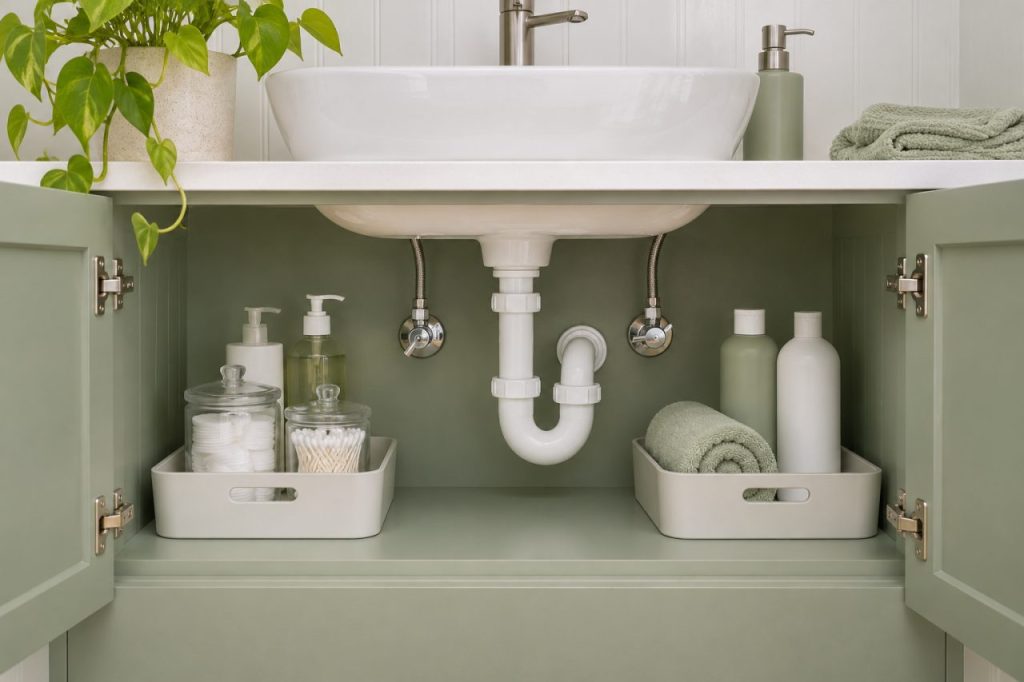
An under-sink cupboard can look generous until the waste trap, supply pipes and door hinges are taken into account. The useful space is what you can reach without moving plumbing or unloading the whole cupboard. This project creates removable storage around those obstacles. It suits a sound, dry cupboard; persistent moisture or a leak needs attention before anything goes back inside.
Map the usable space
Empty the cupboard and photograph the arrangement of the pipes. Measure the internal width, depth and height, then mark where the trap and hinges intrude. Measure the opening too: a tray that fits inside may still be too wide to pass through the door. Use folded paper to test possible tray footprints before buying containers. Leave the valves, connections and trap visible and accessible.
Build three removable groups
Put daily toiletries in one shallow, washable tray near the front. Put spare sealed products in a second tray behind it or to one side. Keep cleaning products separate, in their original labelled containers and in appropriate child-resistant storage where children could reach them. Do not decant chemicals into decorative bottles. Choose containers you can lift when full, rather than one large box that becomes awkward to remove.
Work around the pipes
Try two narrow trays either side of the trap rather than forcing a full-width organiser into place. A freestanding shelf riser can create a second level only if it stands securely and does not touch pipework. Check that the tallest bottle clears the riser and that the door closes normally. Avoid fixing anything into the cabinet back when you cannot establish what is behind it. Never use a pipe as a shelf support.
Test a normal morning
Put back only what you actually use here. Open the door, take out your everyday products, replace them and reach the shut-off valves. If another item must be moved every time, change the layout now. Labels are useful for shared supplies, but they cannot rescue a container that is too deep. A small front tray often works better than several stacked boxes.
When the arrangement fails
A tray that catches on a hinge needs a smaller footprint, not more force. Damp cardboard should be replaced with a suitable washable container, while the source of damp is investigated. If the space remains cramped, move reserve towels and unopened bulk supplies elsewhere. Recheck after a week: the best result is a cupboard that empties quickly for maintenance and stays understandable to everyone who uses it.
Further reading
Claire Salinge: small bathroom under-sink organisation (video description)