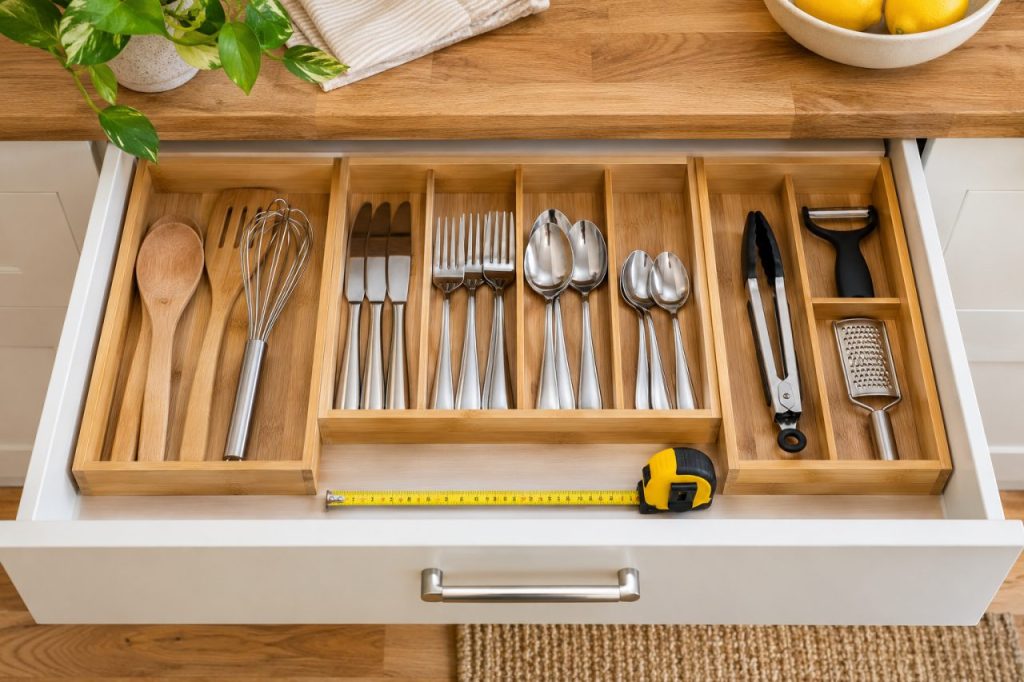
A drawer organiser is only useful if it fits the drawer and the tools you actually use. The internal height is often the forgotten measurement: a tray can fit across the base while a tall utensil catches as the drawer closes. Start with one drawer, reduce its contents and trial a layout before buying a complete set of inserts.
Measure the inside and the opening
Measure the usable width and depth at the base, accounting for sloping sides or fittings. Measure the clearance above the base when the drawer is partly closed. Check whether the drawer opening is narrower than the internal space. Record the longest utensil you plan to store there. These dimensions matter more than the cabinet’s advertised external width.
Sort by the task
Empty the drawer and group tools by use: serving, preparation, baking or everyday cutlery. Remove broken items and duplicates you do not need. Store sharp tools in a suitable protective arrangement rather than loose beneath other utensils. Put items needing child-resistant storage somewhere appropriate. Clean the drawer according to its care instructions and let it dry before returning anything.
Trial the compartments
Use clean existing trays or paper footprints to test the divisions. Long utensils may need one lengthwise channel while small tools work better in shallow groups. Leave enough room to take an item out without lifting several others. If an adjustable divider presses against the drawer sides, check the manufacturer’s instructions and avoid using pressure that could distort the drawer.
Test with the drawer closed
Return the contents gradually and close the drawer gently after each group. Check that ladles, whisks and handles do not protrude above the clearance. A drawer that jams should be emptied and reassessed, not pushed harder. Keep frequently used items near the easiest reach and occasional tools further back, provided they remain accessible.
Make the arrangement repeatable
Label unusual shared categories if that helps the household return things consistently. After a week, inspect the compartment that has become a mixed pile. It may be too small, too deep or too vaguely defined. IKEA’s drawer guidance highlights clear sections; the practical test is whether someone else can put clean utensils away without asking where each one belongs. Keep one modest space free for normal change rather than packing every compartment tightly.
Further reading
IKEA: kitchen cabinet and drawer organisation