A kitchen cupboard can hold plenty and still be difficult to use. The problem is often the sequence of taking things out and returning them. Choose one cupboard rather than emptying the entire kitchen. A small completed improvement will show which storage habits work before you invest in new fittings or reorganise every shelf.
Define the cupboard’s job
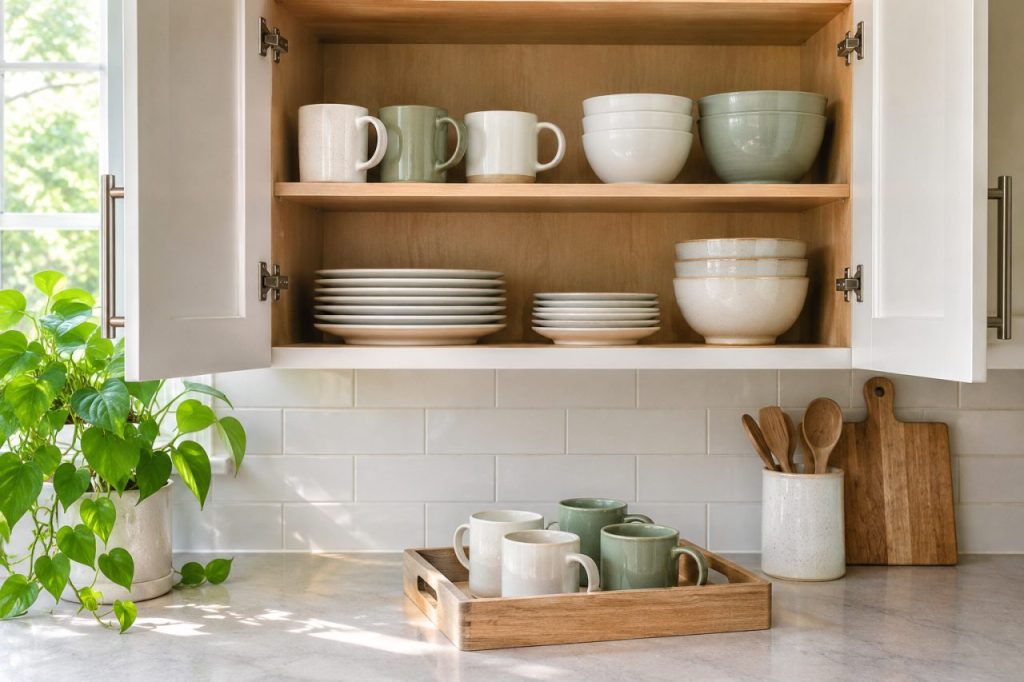
Decide what belongs here based on its position. A cupboard near the table may suit everyday crockery; one near the preparation area may suit food containers or frequently used tools. Avoid mixing too many unrelated categories. Write down its main purpose so sorting decisions have a clear reference point.
Empty and inspect
Move the contents to a stable surface and check for damaged items, unnecessary duplicates and things that belong elsewhere. Inspect the shelves and supports without overloading them. Clean according to the cabinet’s care guidance and dry thoroughly. Do not use a liner or shelf riser to hide a damaged shelf. Any repair that affects load-bearing needs an appropriate solution.
Return the everyday group first
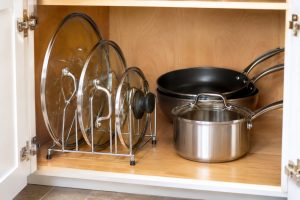
Put the most-used items where they can be reached comfortably. Keep heavy items in a suitable low position and avoid precarious stacks. Check the cabinet and any organiser’s capacity rather than assuming empty space should be filled. Give lids and containers a deliberate arrangement so returning them does not require rebuilding a tower.
Perform the return test
Take out a typical item and put it back as if you were unloading the dishwasher or clearing the table. If you need two hands to hold other objects out of the way, simplify that group. A shelf riser or divider can help only if it is stable, correctly sized and suitable for the load. Trial the layout before purchasing a full matching set.
Deal with what remains
Move occasional items to a suitable secondary location, donate usable extras where appropriate and dispose of damaged items responsibly. Keep undecided items in one dated review box rather than putting them straight back into prime space. After a week, inspect the cupboard with the same take-out-and-return test. Success means normal daily use leaves it reasonably ordered, not that every shelf looks full and perfectly styled.
Further reading
IKEA: kitchen cabinet organisation