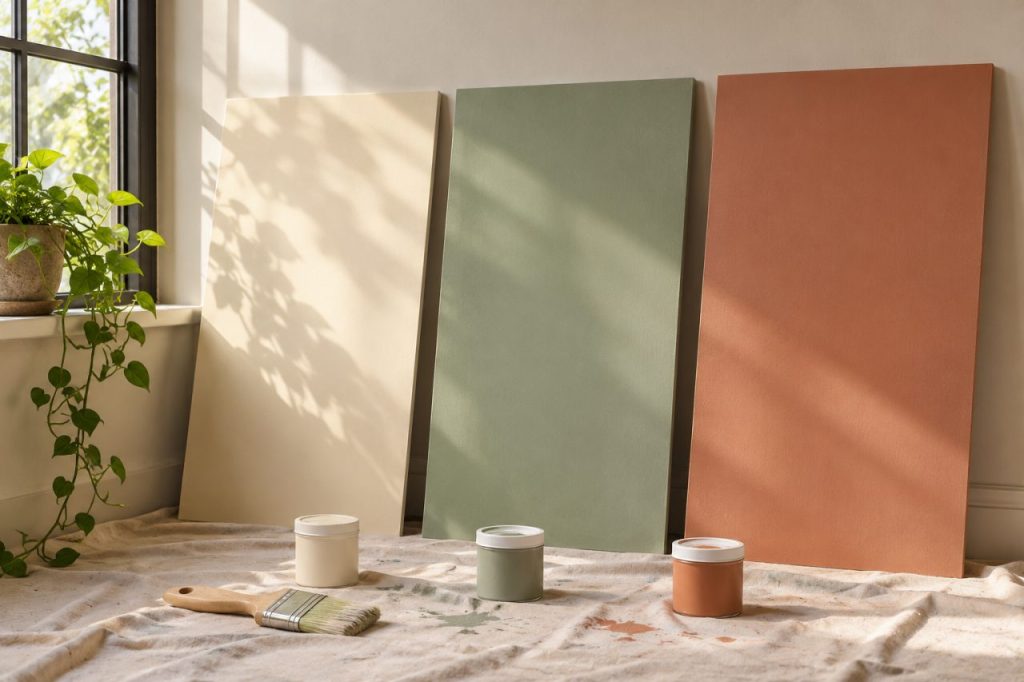
A colour that looks calm on a small card can feel very different across a room. The useful question is how the candidate works beside the floor, furniture and lighting you are keeping. Comparing a few physical samples in the actual space gives you more information than collecting dozens of screen images. It also helps you narrow the choice before committing to a large quantity of paint.
Start with the fixed colours
Look at the floor, worktops, upholstery and other elements that will remain. Choose two or three candidates that suit those colours rather than testing an entire fan deck at once. Give each sample a clear name and product reference. Keep decorative inspiration separate from the product specification so a saved image does not get mistaken for an exact colour match.
Use an appropriate sample method
Follow the tester manufacturer’s instructions for preparation, coats and drying. Dulux’s tester range uses actual paint, which can help assess colour in the room. Check whether the tester’s finish matches the intended final product; sheen can change the appearance. If using movable sample boards, prepare a suitable surface and recognise that its texture may still differ from the wall.
Compare in several positions
View each dry sample beside the main fixed materials and on more than one wall if possible. Check it in the daylight the room actually receives and under the lamps you normally use. Do not make the decision from a phone photograph alone, because the camera and screen can alter the appearance. Keep notes in plain language: too cool beside the floor, too strong at night, or suitable with the sofa.
Avoid the tiny-patch trap
A small patch surrounded by a very different existing colour may be difficult to judge. Use a sufficiently visible sample area or a suitable larger board, while following permission and surface requirements. Compare candidates separately as well as together. If all three are wrong, identify the common problem before buying three more random shades.
Confirm the product before buying
Once the colour choice is made, check the final paint is suitable for the surface and room. Read its preparation, coverage, ventilation and application instructions; calculate quantities from measured wall area with the product’s guidance. Do not treat a colour decision as a complete painting plan. Keep the final colour and finish reference for later touch-ups, and remember that a fresh touch-up can still look different from an aged surrounding surface.
Further reading
Dulux: real-paint colour testers