When a living room doubles as a play area, storage has to work for both children and adults. The aim is to make a useful selection easy to reach and easy to put away, while keeping the room’s routes and other activities clear. Start with the toys used in this room rather than trying to move the entire collection into it.
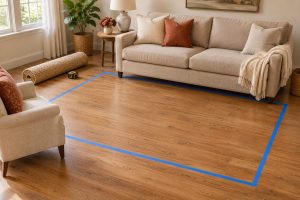
Define a play zone
Choose a place where play can spread out without blocking doors, heaters or walking routes. Check the furniture around it for stability and follow its anchoring instructions. Keep cords, unsafe small objects and items unsuitable for the child’s age out of reach. A storage basket cannot make an otherwise unsafe position suitable for play.
Sort into broad groups
Use categories a child can recognise: blocks, pretend play, drawing materials or soft toys. Check toys for damage and follow age and safety information. Keep small components intended for older children separate where younger children may be present. Avoid a complicated sorting system that requires an adult to identify the correct tiny compartment every evening.
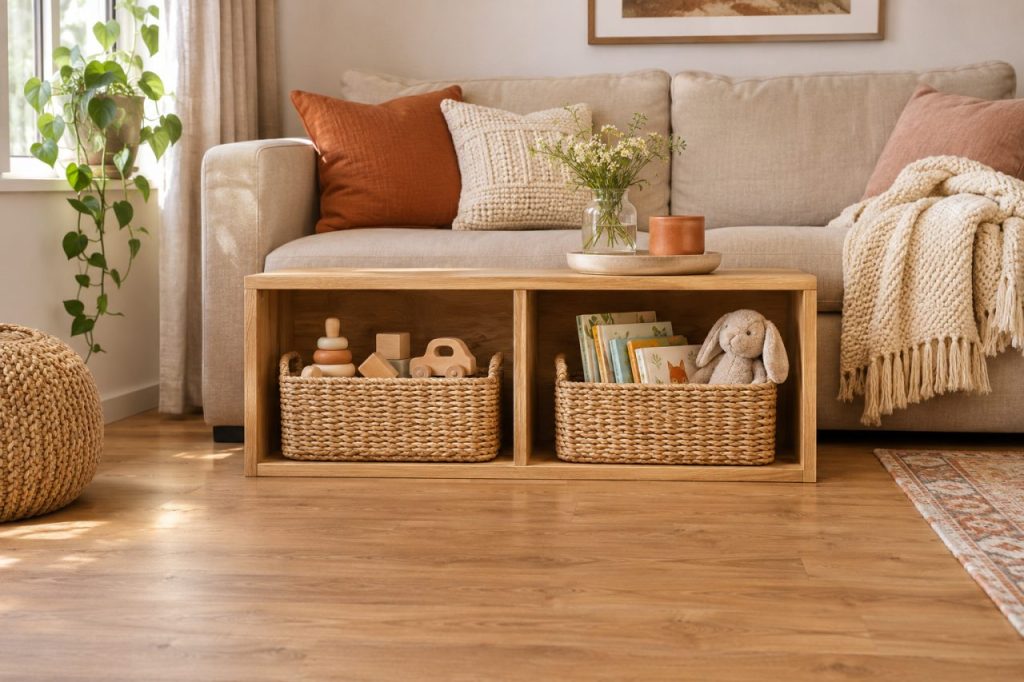
Choose manageable containers
A shallow, light container can be easier to carry and inspect than a deep heavy box. Check that lids and storage furniture are suitable for children; avoid improvised chests or lids that could trap fingers or close unexpectedly. Keep heavier items low and within the storage unit’s limits. Test whether the child can reach and replace a container safely before deciding the arrangement is complete.
Keep a smaller active selection
If the collection overwhelms the available space, store some appropriate toys elsewhere and rotate them according to interest. Do not hide favourite comfort items simply to make a display look tidy. Picture labels can help younger children recognise groups, while adults may prefer a simple inventory for stored sets. Leave room to return toys without compressing or balancing them.
Build a short shared reset
At a natural pause, return one group at a time and clear the walking route. Make the first target practical: blocks back in their tray and books in their space. If cleanup repeatedly fails, reduce the number of active groups or make the containers easier to use. A shared living room does not need to look untouched; it needs a dependable way to move between play and the household’s other activities.
Further reading
Reader discussion: balancing children’s play and limited living space
For furniture that requires anchoring, follow its instructions and the manufacturer’s wall-restraint guidance.