A scrap box becomes easier to use when it supplies a specific small project. A nine-square patchwork panel gives you a clear endpoint and a chance to practise consistent seams. The panel can become the front of a simple pouch, a decorative patch or part of a larger project later. Do not decide on the final object until you have measured the finished panel.
Choose fabrics that behave similarly
Use stable woven scraps of roughly similar weight. Stretchy jersey, thick upholstery fabric and slippery lining can each be useful, but mixing them into a first patchwork panel makes alignment harder. Check the pieces for damage and colour transfer, and prepare them according to their care needs. Press them before judging whether they are large enough.
Cut nine equal squares
A convenient practice size is nine squares measuring 10 by 10 cm. Make a paper or card template and check its sides with a ruler. Keep the fabric flat while marking and cutting. If you are new to rotary cutters, use scissors for this small project; cutting tools require an appropriate surface and careful handling regardless of the method.
Lay out the design
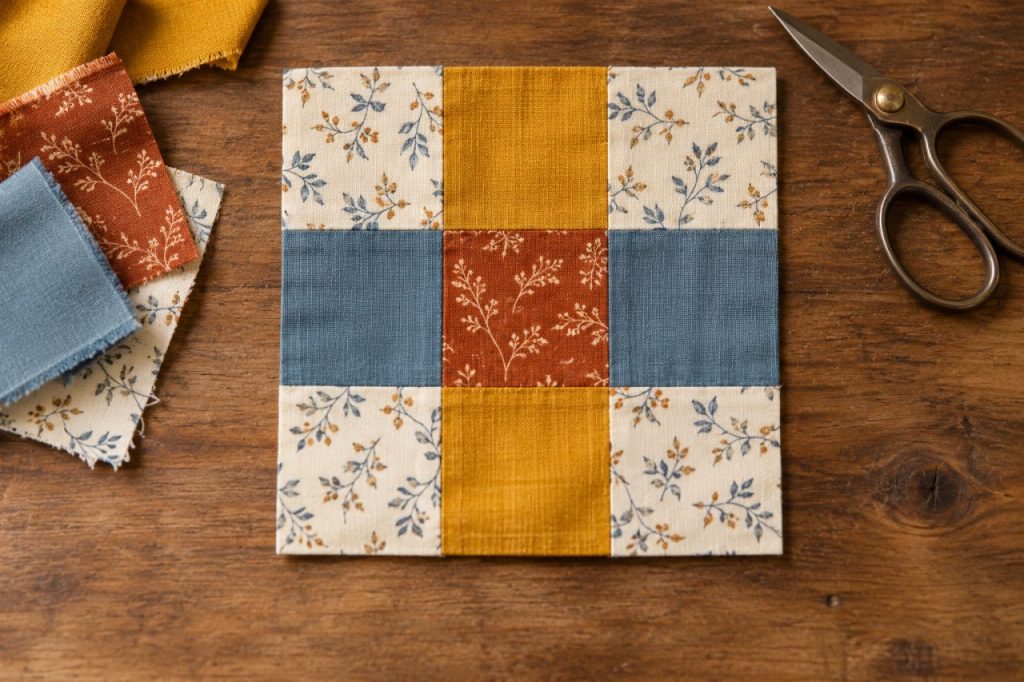
Arrange the squares in three rows of three. Try separating similar dark pieces so the design does not unintentionally become heavy on one side. Take a photograph once you like the arrangement. Stack each row in order and label it with a paper note. This small organisational step prevents a good layout being lost between the table and the sewing machine.
Join rows consistently
Sew the first row with a consistent 1 cm seam allowance, then repeat for the other rows. Press the seams deliberately without stretching the fabric. Join the rows, matching the seam intersections as carefully as possible. Pin or clip where useful, removing pins before the needle reaches them. A nine-square panel made with these dimensions should finish around 26 cm square before any outer-edge seam is added.
Measure before choosing its use
Lay the panel flat and measure it in both directions. Small differences are normal on a practice piece; trim only enough to make the outer edges square. If you turn it into another item, account for that item’s seam allowances separately. Do not assume a patchwork panel is heat-resistant or suitable for food contact. Keep the template with the remaining scraps, and note which fabrics were easy to sew so your next panel starts with better choices.
Further reading
Hobbycraft: inspiration for reusing craft scraps