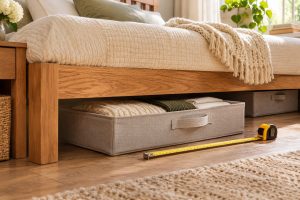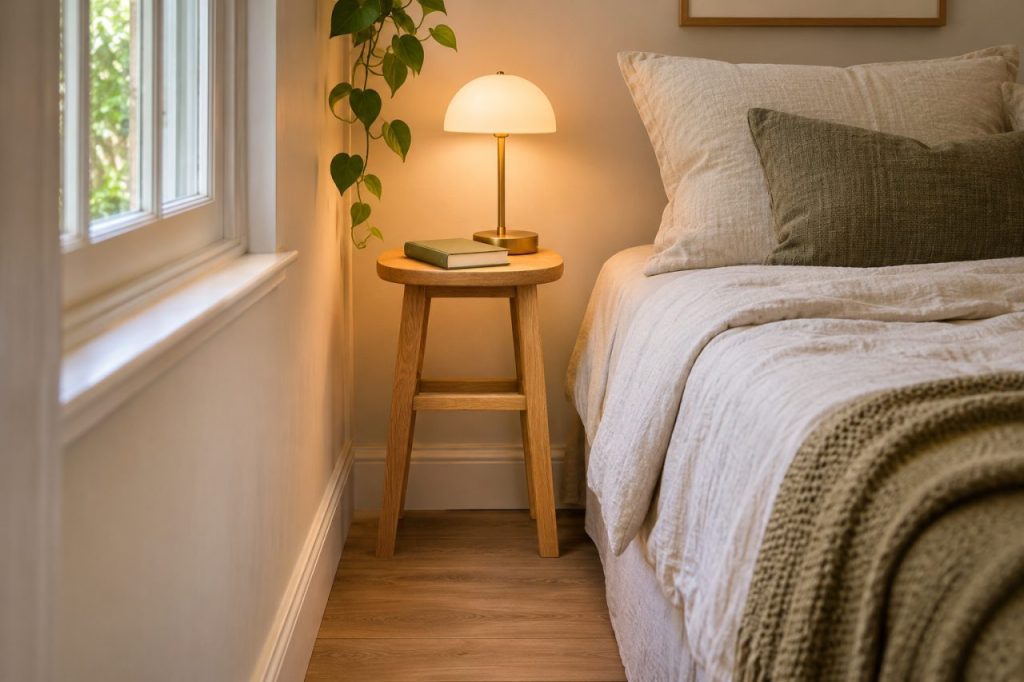
A conventional bedside cabinet can consume the only walking space beside a bed. Before replacing it with something smaller, decide what the bedside surface must actually hold. A book, glasses and a lamp require a different arrangement from a drawer full of medication or charging equipment. The aim is a stable, reachable surface that leaves the room usable.
List the essentials
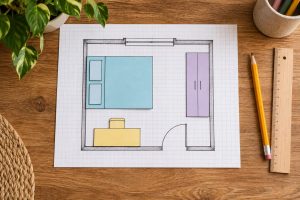
For a few nights, note what you use at bedtime and on waking. Remove items that belong elsewhere. Keep anything requiring secure or temperature-controlled storage in a suitable location rather than choosing a bedside surface solely for convenience. Once the list is short, arrange those objects on a piece of paper to estimate the surface area you need.
Measure from the bed
Measure the gap beside the frame and check the route to the door and wardrobe. Sit on the bed and test a comfortable reach using a stable temporary surface. Account for the height of the mattress rather than just the bed frame. Make sure a drawer or cupboard door can open without hitting bedding or blocking the route out of the room.
Compare realistic alternatives
A narrow freestanding table can work if its base is stable. A compact cabinet offers concealed storage but may need anchoring according to its instructions. A bed-frame caddy only suits frames and loads its manufacturer permits; check that it does not interfere with moving parts. A wall shelf needs appropriate permission, wall assessment and fixings. Do not choose it merely because the floor space is small.
Keep cables and lighting deliberate
Use lamps and charging equipment according to their instructions. Keep cables out of the walking route and clear of bed mechanisms. Do not conceal chargers beneath pillows or bedding. If a lamp will not sit securely alongside the other essentials, reconsider the surface or use an appropriate existing lighting arrangement. Avoid improvised electrical changes to gain a few centimetres.
Try the layout before committing
Borrow a suitable small table or mark its footprint during a supervised layout test. Check access in both daylight and the room’s normal evening lighting. Return the floor to a clear state afterwards. If you keep knocking objects off the edge, the surface may be too small or too low. Reducing the number of objects often solves the problem more effectively than adding shelves around the bed.
Further reading
IKEA: compact bedroom storage ideas
For furniture that requires anchoring, follow its instructions and the manufacturer’s wall-restraint guidance.