A bedroom layout needs to work with doors, storage and the way you make the bed. A photograph rarely shows those constraints. Drawing a simple scale plan first lets you reject awkward arrangements before lifting furniture. You do not need design software: paper, a ruler and accurate measurements are enough for a useful first pass.
Draw the fixed features
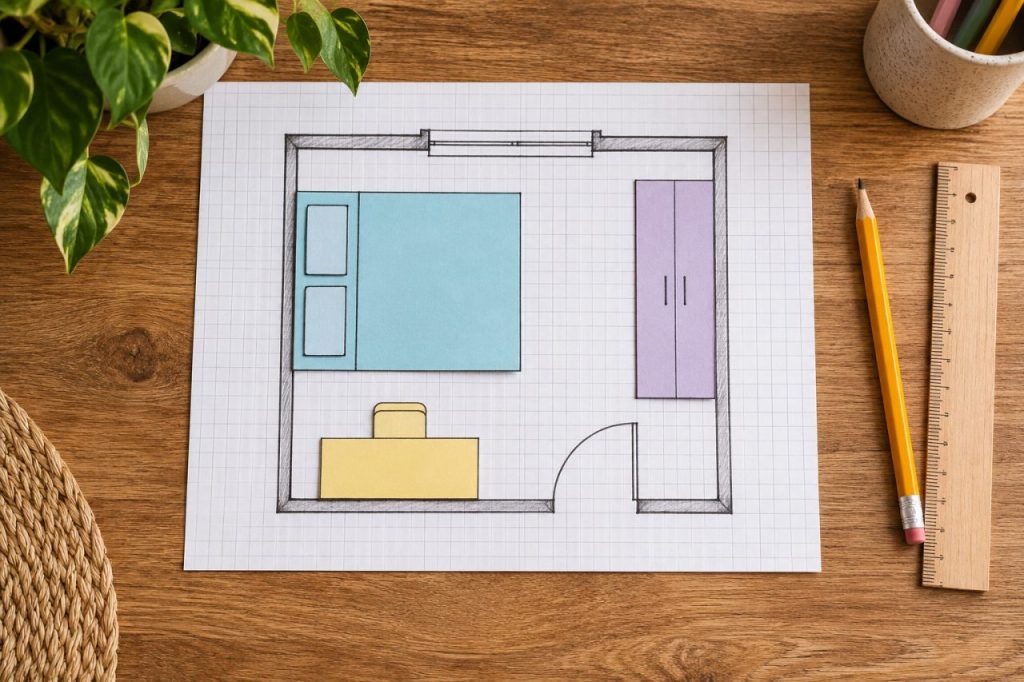
Measure the room and record each wall length. Mark door openings and the direction they swing, windows, radiators, sockets and built-in storage. Choose a scale you can maintain, such as one centimetre on paper for twenty centimetres in the room. Label the measurements as well as drawing them so a small sketching error does not become a purchasing decision.
Make movable furniture shapes
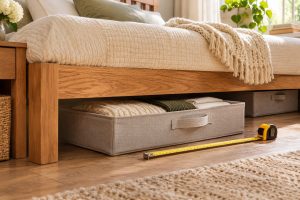
Measure the full footprint of the bed, including any projecting frame. Measure wardrobes, chests and bedside pieces, then cut paper rectangles at the same scale. Add an outline showing the space needed for drawers and doors to open. For under-bed storage, include the withdrawal space. Keep the paper pieces labelled so similar rectangles do not get confused.
Test three ordinary activities
Arrange the largest piece first, then trace a route from the doorway to each side of the bed you need to access. Test dressing at the wardrobe and opening the drawers. Finally, think through changing the bedding and cleaning the room. An arrangement that fits every rectangle can still be unusable if it requires stepping over something or shutting one door to open another.
Compare only a few layouts
Keep one plan close to the current arrangement and make two alternatives. Score each against your actual priorities: access, storage, daylight and a clear route out. There is no universal best position for every bed. Keep heaters, vents and escape routes clear, and follow relevant furniture and appliance clearances. Do not move fixed electrical or heating equipment as part of this layout exercise.
Move safely and evaluate
Photograph the chosen plan and check the measurements again before moving anything heavy. Use suitable help and equipment, empty furniture when appropriate and follow assembly and anchoring instructions. Do not drag loaded furniture or disconnect necessary anchors without a safe plan to refit them. Live with the new layout for several days before adding decorative items. If access still feels awkward, change one smaller piece before moving the bed again.
Further reading
Reader problem: planning a small bedroom layout
For furniture that requires anchoring, follow its instructions and the manufacturer’s wall-restraint guidance.