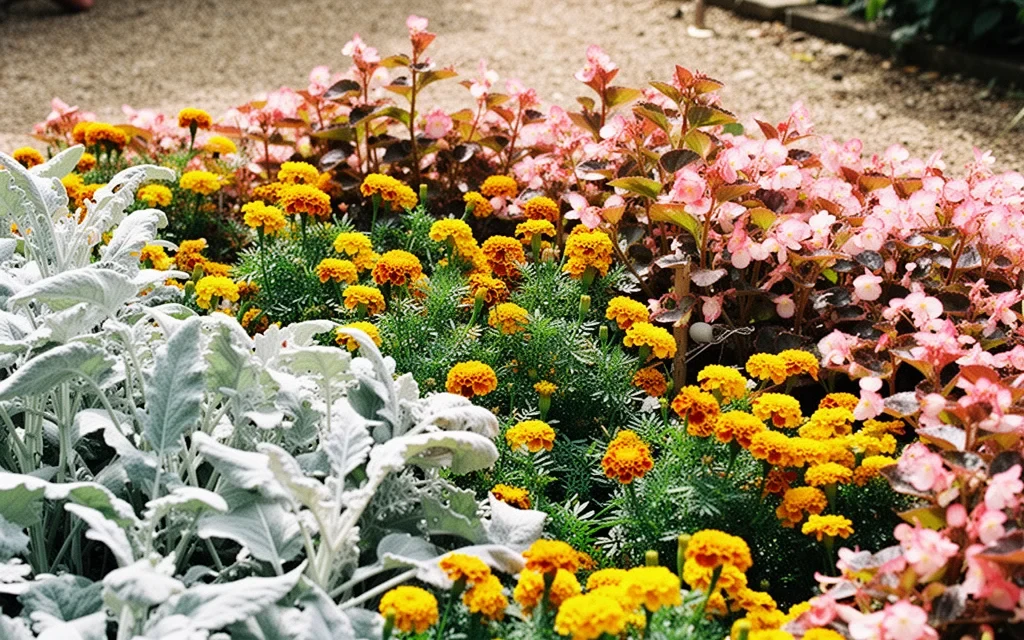
Designing a garden border that works through the whole year starts with planning for structure and seasonal change. Choose a backbone of shrubs for stability, layer plants by height to add depth, and leave room for spring bulbs and perennials to thrive. Understanding your soil type and drainage helps guide plant selection, ensuring your border remains vibrant and well-balanced throughout the seasons. Begin by assessing your space and considering how plants will grow and interact over time.
Understand Your Garden’s Starting Point
Before selecting plants, assess your garden’s soil type, drainage, and light exposure. These factors determine which plants will thrive and which will struggle, shaping the long-term success of your border. Start by identifying your soil type—whether it’s clay, sand, silt, loam, or chalk. Each type behaves differently: clay retains water, sand drains quickly, and loam offers a balanced mix. The RHS provides detailed guidance on soil types to help you understand how to work with your specific conditions.
- Check drainage: Even if you know your soil type, drainage depends on compaction, water table levels, and slope. Poor drainage can lead to waterlogged roots, while overly free-draining soil may require drought-tolerant plants. Look for signs like water pooling after rain or dry, cracked soil in summer.
- Test pH: Use a soil testing kit (available at garden centres) to measure acidity or alkalinity. pH affects nutrient availability; for example, ericas prefer acidic soil, while lavender thrives in alkaline conditions. The RHS offers analysis services to provide deeper insights into your soil’s composition.
- Assess light: Note how much sunlight your border receives daily. Full sun, partial shade, or dappled light will influence plant choices. A Mediterranean-style border, for instance, requires sun and well-draining soil, while a woodland border suits shade-tolerant species.
These initial steps form the foundation for selecting plants that align with your garden’s unique conditions, ensuring your border remains structured and vibrant through the seasons.
Build Structure with Layered Planting
Start by selecting shrubs with dense foliage and year-round presence, such as boxwood or hydrangeas, to form the backbone of your border. These plants provide stability and define the border’s shape, acting as a framework for seasonal additions. Position them at the rear or center, depending on their height, to avoid overwhelming shorter plants. Once the structural layer is set, arrange mid-height plants like ornamental grasses or spirea in front of the shrubs, ensuring they complement the shrubs’ texture and color. Finally, leave space for spring bulbs and perennials at the front, where they can emerge without competing for light or space. This layered approach ensures visual balance and allows each plant to thrive without overcrowding. For detailed guidance on positioning plants by height, refer to the RHS’s step-by-step border planning advice, which emphasizes grouping plants by size and spacing to maintain structure over time.
Plan for Seasonal Changes
Reserving space for spring bulbs and perennials requires intentional planning to ensure your border remains vibrant through each season. Start by mapping out when plants bloom and when they recede, creating a timeline that overlaps flowering periods. For example, plant early-blooming bulbs like crocus or snowdrops in autumn, positioning them where taller plants will not overshadow them in spring. Use the RHS’s advice on planting positions to group perennials with staggered bloom times—such as peonies followed by rudbeckia—so the border never looks sparse.
- Layer with structure: Place evergreen shrubs or structural plants at the back to anchor the border year-round, as noted in the DIY Garden guide. This creates a framework for seasonal plants to fill in without competing for space.
- Plan for gaps: Leave small, unoccupied areas between structural plants to accommodate bulbs that emerge in spring or perennials that spread over time. The RHS’s step-by-step border planning advice highlights the importance of spacing for growth and movement.
- Consider aftercare: Mulch in late winter to retain moisture and suppress weeds, as recommended in the RHS’s aftercare guide. This supports both established plants and new additions as they settle into their roles.
By aligning plant choices with seasonal rhythms and leaving room for dynamic growth, your border will evolve without losing its structure. Use the RHS’s Plant Finder tool to identify species that thrive in your conditions and fit into your seasonal plan.
Incorporate Functional Elements
When designing a garden border, consider how existing landscape features such as pathways, patios, or trees can influence your layout and overall design. These elements are not just decorative; they can serve as natural anchors for your border, helping to define its shape and structure. For example, a pathway can guide the eye along the length of a border, while a patio can act as a backdrop that highlights the plants in front of it. According to GreatGardenPlans, evaluating these features ensures your border complements rather than competes with them.
-
Pathways can dictate the width and depth of your border. A narrow pathway might suggest a more compact, structured border, while a wide path could allow for a more expansive, flowing design.
-
Patios and other hard landscaping features can be used to create contrast with your planting. For instance, a border with tall, architectural plants might look striking next to a smooth, flat patio surface.
-
Trees and other existing plants can be integrated into your border design. They can act as a natural backdrop or provide dappled shade for plants that thrive in partial sun.
Advertisement -
Consider the function of your border. If it’s near a seating area, you might choose scented plants or those with visual interest to enhance the experience of the space.
-
Be mindful of how your border interacts with the rest of your garden. A border that curves around a corner or follows the edge of a wall can create a sense of continuity and flow.
Avoid Common Pitfalls
Designing a garden border that thrives year-round requires careful planning, but several common mistakes can undermine its structure and longevity. Overcrowding is a frequent error, as planting too densely can lead to competition for water, nutrients, and light. This not only stunts growth but also makes maintenance harder, as plants may become tangled or fail to bloom. According to the RHS, measuring your border’s area and spacing plants appropriately—such as allowing five herbaceous perennials per square metre—helps prevent this issue. Similarly, ignoring long-term growth patterns can cause chaos: shrubs that grow wider or taller than expected may overshadow smaller plants or encroach on pathways. The RHS advises positioning structural plants first to create a stable framework, then adding shorter, seasonal plants around them.
- Don’t neglect light and soil conditions: Failing to assess sunlight exposure or soil drainage can lead to plant failure. For example, a north-facing border may not support sun-loving species, while poorly draining soil could harm drought-resistant plants. The RHS recommends checking light levels and soil type before selecting plants.
- Ignore seasonal interest: Planting only for one season can leave the border looking sparse. The RHS suggests listing plants by their blooming months to ensure continuous visual appeal, but this requires balancing species with varying growth cycles.
- Overlook border depth and shape: Shallow borders may not accommodate deep-rooted plants, while overly formal straight lines can feel rigid. The BBC Gardeners World advises considering border depth and using curves to soften edges in small spaces.
- Fail to plan for plant size: Choosing plants without considering their mature dimensions can lead to overcrowding. The RHS highlights the importance of selecting structural plants first to define the border’s outline.
By addressing these pitfalls early, you create a border that adapts to changing conditions and maintains its structure over time. For detailed guidance on assessing soil and light, see the RHS’s planning steps.
Disclosure: As an Amazon Associate I earn from qualifying purchases. Links in the related-products section are paid links.
Featured image: AI-generated variation of a photograph credited to Barney Goodman · Unsplash. Image modified using AI.