Once a furniture project looks finished, it is tempting to put it straight into service. The surface may still need time before it can tolerate objects, cleaning or everyday wear. Care depends on the actual finish, not simply on the fact that the furniture is wood. Keep the product information with the piece so future cleaning decisions do not depend on memory.
Record what was applied
Write down the coating or finish, colour, application date and any compatible topcoat. Keep the label or a clear photograph of it. Note the manufacturer’s stated drying, recoating and curing guidance. These are different stages, and their timing can depend on conditions. If the piece was bought already refinished, ask the maker what they used before trying a polish or cleaner.
Introduce use gradually
Follow the finish manufacturer’s instructions for when the item can be moved and used. Avoid stacking objects, putting down a table covering or pressing protective pads into a surface before it is ready. Keep it in suitable conditions during curing. Do not try to accelerate the process with an improvised heater or intense heat source.
Choose protection that suits the surface
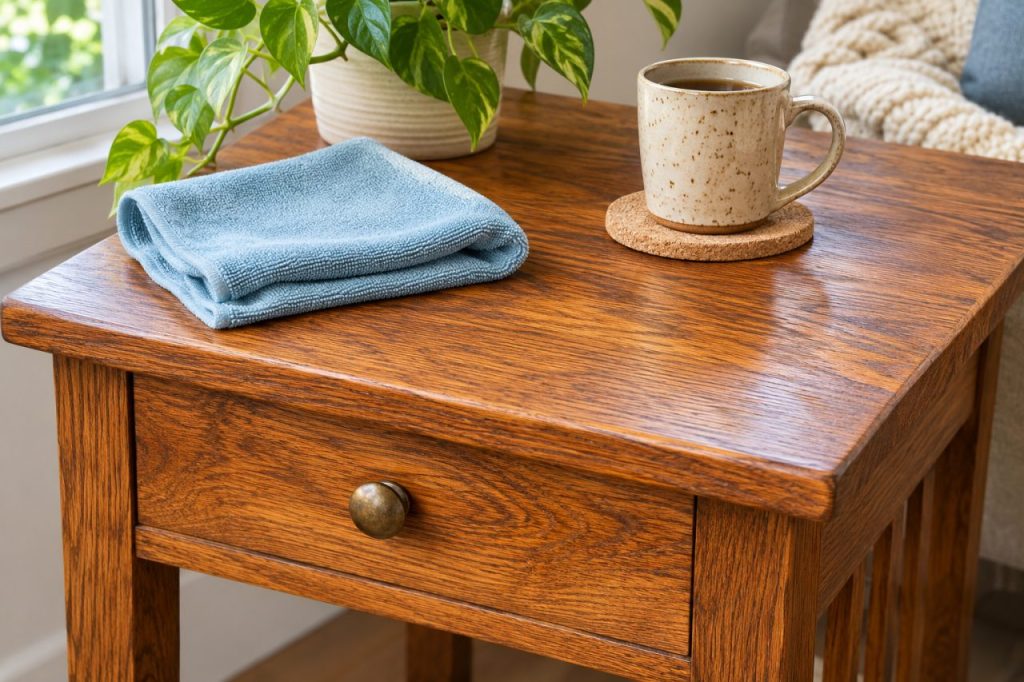
Use suitable coasters or mats where the finish and use call for them, but check their backing material is compatible. Some materials can mark finishes when left in contact. Lift objects rather than dragging them, and keep hot cookware off ordinary furniture. A decorative finish does not automatically make a surface heatproof, waterproof or suitable for direct food preparation.
Clean according to the finish
Begin with the maker’s care instructions. Use the least aggressive approved method and test an inconspicuous area if directed. Do not combine household cleaners or assume that oil, wax, alcohol or an abrasive pad is safe for every coating. Deal with a spill promptly using the approved method, then dry the surface as appropriate. Avoid letting liquid collect around seams and exposed board edges.
Respond to damage carefully
If the surface becomes sticky, cloudy or starts peeling, stop experimenting with additional products. Photograph the area and ask the finish manufacturer or maker for advice. A scratch may need a different repair from a coating failure. Keep leftover products safely stored as labelled, with no transfer into food containers. A short care note placed in a drawer makes it easier for the next person to look after the furniture without undoing the work.
Further reading
Ronseal: wood-finish guidance; consult the exact finish’s instructions