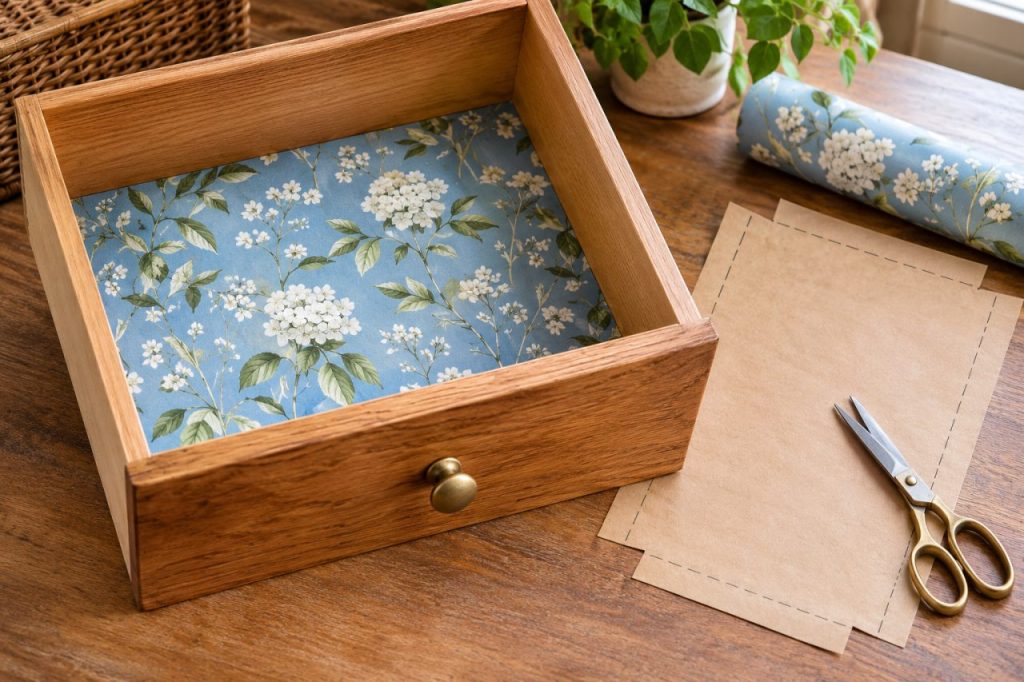
A removable liner can make a sound drawer look tidier and keep small items from catching on an uneven-looking base. It should not be used to disguise damp, mould, sharp damage or structural failure. Start with a non-adhesive material compatible with the drawer finish and intended contents. Making a paper pattern first reduces wasted material and awkward trimming inside the drawer.
Check the drawer’s condition
Empty the drawer and inspect its base, corners and joints. Clean it using the furniture’s care instructions and let it dry fully. Investigate a persistent smell or moisture rather than sealing it underneath a liner. If the base is loose or bowed, address that before loading it. A liner is a removable surface layer, not reinforcement.
Create a paper pattern
Fit sheets of clean paper across the base, overlapping them where necessary. Join the sheets to each other with tape rather than taping directly to a delicate finish. Crease the paper gently into the corners and mark the edges. Remove the joined pattern, cut it out and return it to the drawer to check the fit. Mark which edge faces the front.
Choose and cut the liner
Check the liner manufacturer’s compatibility and care guidance, especially for varnished or painted surfaces. Avoid materials that could transfer colour, trap moisture or react with the finish. Place the tested pattern on the liner and cut on a suitable surface outside the furniture. Allow a small fitting clearance so the liner lies flat without riding up the sides.
Fit without forcing it
Lay the liner in the drawer and smooth it from the centre outwards. Return a few contents and open and close the drawer. If the liner bunches, check whether it is too large or too flexible for the load. Do not immediately add strong adhesive to fix a sizing problem. A different removable material may work better for that drawer.
Make maintenance easy
Label the underside discreetly if you are making liners for several similar drawers. Lift them periodically to inspect and clean the base, following the material’s care instructions. Dry both surfaces before replacing the liner. For drawers holding kitchen items, select materials suitable for that use and keep unwrapped food off an unsuitable liner. Save the paper pattern flat so a worn liner can be replaced without measuring the drawer again.
Further reading
Reader problem: deciding how far to take a first furniture refresh