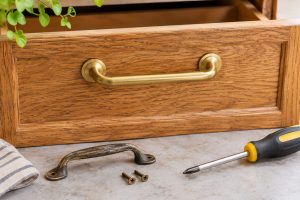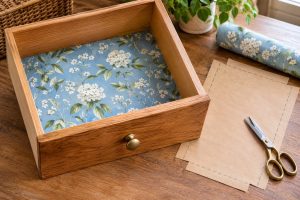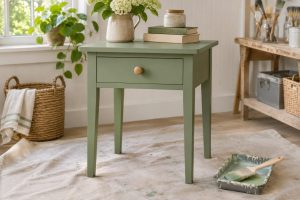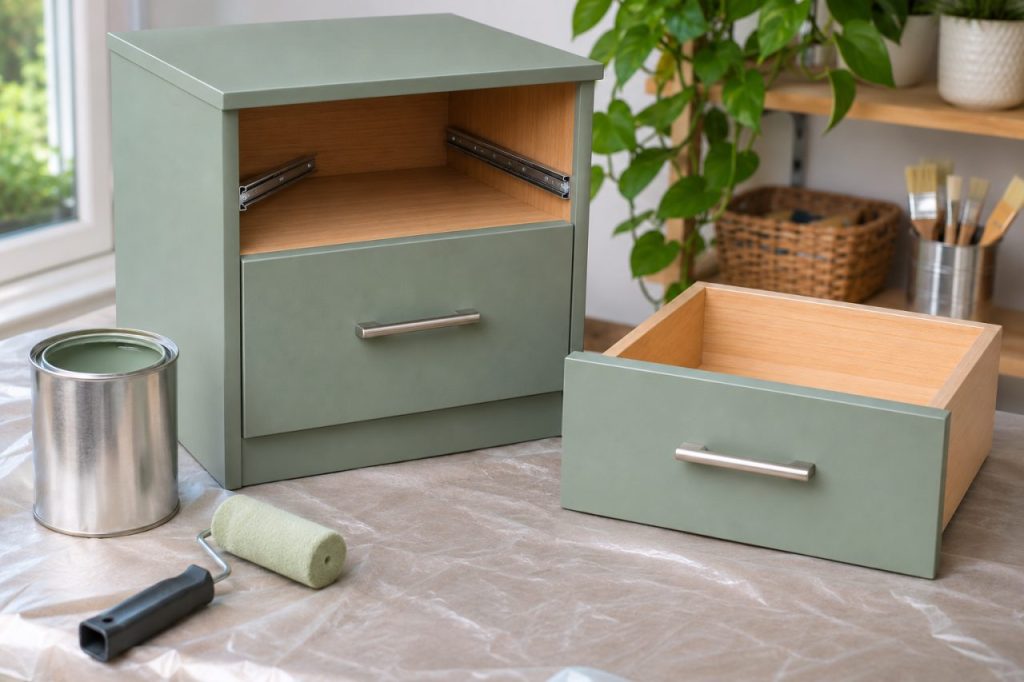
Painting a sound laminate cabinet can change its appearance, but paint will not repair swollen board, loose joints or peeling edges. The first decision is whether the furniture is worth preparing at all. This guide helps you assess a small piece and choose a compatible coating system. It is not a universal paint recipe: the instructions for the exact products you select control the process.
Identify the surface and condition
Look at an inconspicuous edge and the underside. Printed laminate, thin real-wood veneer and solid wood are different surfaces. Do not sand to find out which one you have. Photograph the piece, note its construction and ask the coating manufacturer if the surface is uncertain. Stop if the structure is unstable, boards have swollen or an older painted finish may require specialist assessment.
Choose a complete compatible system
Check that the product explicitly suits the substrate and intended indoor use. Confirm its cleaner, preparation, primer or bond coat, topcoat and curing requirements. Some systems require sanding and primer; others specify a different process. For example, Rust-Oleum’s Furniture Transformations instructions describe a particular multi-stage system. Do not combine that system’s preparation claims with unrelated products.
Make a small test area
Remove contents and detachable hardware where the furniture instructions allow it. Protect the work area and follow the product’s ventilation and protective-equipment requirements. Prepare a discreet patch exactly as instructed, then apply the planned coats. Allow the specified curing time before judging the result. A coating that feels dry is not necessarily ready for handling, stacking or cleaning.
Plan the actual work
Label removable parts and put each set of screws in a separate container. Keep sliding surfaces and hardware seats free of unwanted coating unless the product and furniture design permit it. Work on manageable sections so you can maintain the recommended coat thickness. Do not improvise with solvents or mix leftover coatings to make them stretch further. Keep children and pets away from the work area.
Decide whether to continue
After the test has cured, assess appearance and adhesion using the manufacturer’s recommended method. If the finish scratches, lifts or reacts, stop and seek product advice rather than covering it with another random coating. A successful test does not promise permanent scratch resistance, but it reduces the chance of ruining the whole piece. Sometimes replacing handles, cleaning correctly or leaving the original finish intact is the better upcycling choice.
Further reading
Rust-Oleum Furniture Transformations: product-specific application guidance