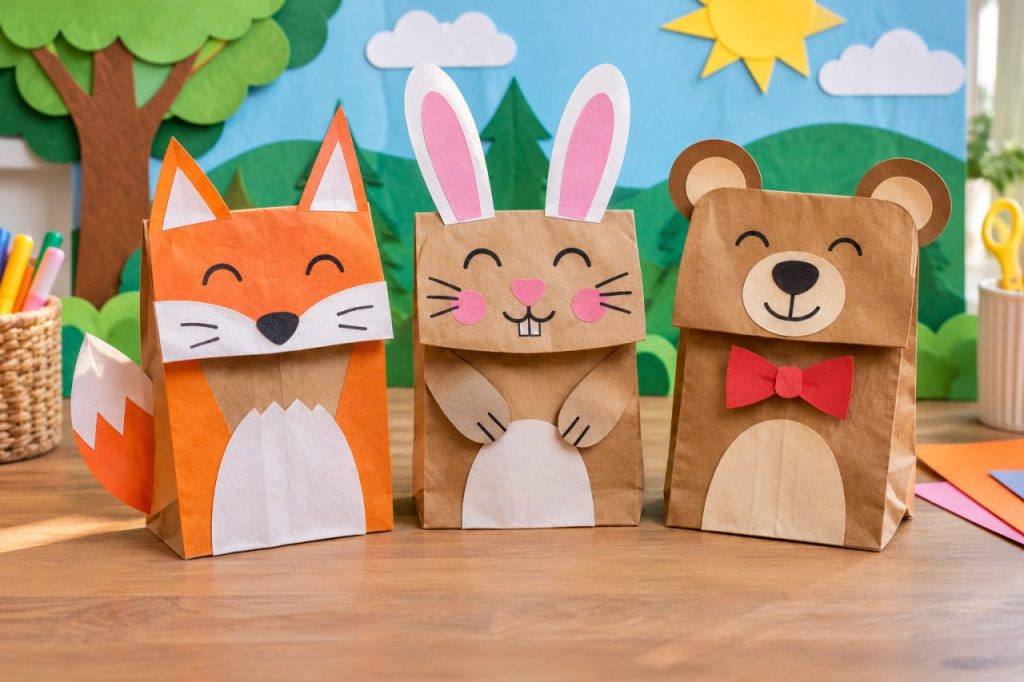
A paper-bag puppet gives a craft session a second activity: telling a story with the finished characters. Use clean paper bags, large paper features and age-appropriate drawing materials. An adult should supervise cutting and assembly according to the child’s abilities. Avoid loose buttons, beads and other small decorations when they could create a choking risk.
Choose one character
Ask the child to choose an animal, an imaginary creature or a person. Keep the first design simple enough to finish: a face, two arms or wings, and one distinguishing feature are plenty. Draw ideas on scrap paper before decorating the bag. This makes it easier to change a plan without covering the puppet in layers of wet glue.
Find the moving mouth
Lay the paper bag flat with its folded bottom facing up. The fold becomes the moving part of the mouth when a hand goes inside. Test the movement before attaching anything. Draw the upper face on the flap and the lower mouth beneath it, checking that the two parts meet when the flap is closed. Leave the bag opening unobstructed.
Add large, lightweight features
Cut ears, wings or clothing from paper and attach them with suitable glue or tape. Use drawn eyes instead of small loose pieces. Keep additions light so the flap still moves freely. If the bag tears, reinforce the area with paper and tape from the inside where practical, or simplify the design. Let the glue dry before putting a hand into the bag.
Build a short story
Choose three moments: the character wants something, encounters a small problem and finds a solution. For example, a bird wants a quiet reading corner, mistakes a noisy box for a nest and asks a friend for help. Invite the child to decide the ending. Two puppets are enough for a conversation; a whole cast is not necessary.
Make a simple performance space
A clear tabletop can act as a stage. An adult can prepare a cardboard screen if desired, checking edges and stability, but the puppet should work without elaborate scenery. Take turns being performer and audience, and let the child change the story on the second performance. Store dry puppets flat in a labelled folder or box. The useful result is a character the child wants to play with, not an exact copy of an adult’s example.
Further reading
Crayola: paper-bag puppet lesson plan