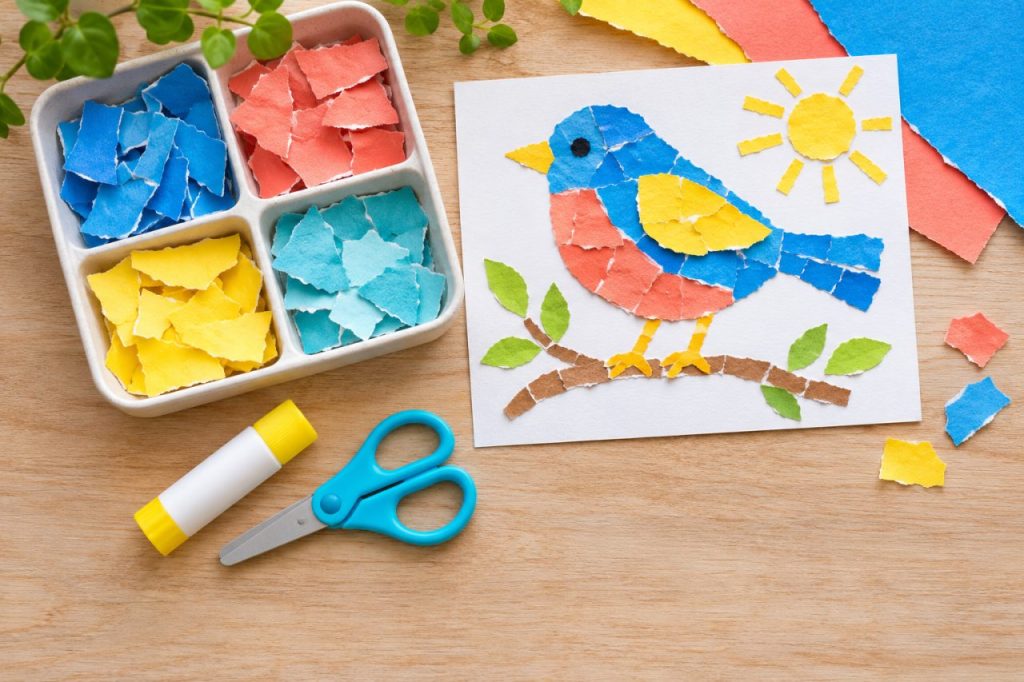
Collage works well when the materials invite choices without overwhelming the table. A small tray of paper, a base sheet and a glue stick can be enough for an absorbing session. The goal is not to remove every possible scrap of mess; it is to make setup and cleanup manageable while leaving the child free to invent a picture.
Choose a useful limit
Offer a few paper colours or textures rather than an entire overflowing craft box. Use clean, appropriate paper without sensitive personal information or unsuitable printed content. Avoid tiny pieces for children who may mouth them. Let an adult prepare shapes when cutting is not appropriate to the child’s abilities. Torn paper is a perfectly good alternative to neat cut edges.
Start with a broad invitation
Suggest a theme that allows different answers: a strange garden, a rainy street or an imaginary animal. Avoid handing over a detailed model that turns the session into a copying exercise. A heavier base sheet or a piece of clean card can support the layers better than thin paper. Keep glue and tools appropriate to the child and supervise their use.
Arrange before gluing
Invite the child to place a few large shapes first. Move them around and notice what changes. Add smaller details only after the main shapes feel right. This makes it possible to experiment without repeatedly tearing off glued pieces. If the child prefers spontaneous sticking, keep the base small enough that the project remains manageable.
Use enough glue, not a flood
Demonstrate applying the glue to the piece or base according to the product instructions. Press the paper down gently, especially at the edges. Keep a scrap sheet under the work when glue reaches beyond an edge. Do not add household chemicals, spray adhesives or hot glue to make a simple paper project stronger. Let thick layers dry before handling the artwork.
Finish with a story and a reset
Ask the child to tell you about the picture rather than guessing what it represents. They may want to add a title or dictate a short description. Place the artwork somewhere flat to dry, collect reusable large scraps in one envelope and dispose of unsuitable pieces. If the tray still contains too much material, offer less next time. A repeatable setup leaves more attention for the creative part of the session.
Further reading
Reader discussion: accessible paper collage and creative play